ꯐꯥꯏꯜ:Tiger phylogenetic relationships.png

ꯃꯁꯤꯒꯤ ꯄ꯭ꯔꯚꯤꯌꯨ ꯑꯁꯤꯒꯤ ꯁꯥꯏꯓ: ২২০ × ২৩০ ꯄꯤꯛꯆꯦꯜꯁ. ꯑꯇꯩ ꯁꯦꯡꯅ ꯌꯦꯡꯕ ꯌꯥꯕ: ২৩০ × ২৪০ ꯄꯤꯛꯆꯦꯜꯁ | ২,০০১ × ২,০৯০ ꯄꯤꯛꯆꯦꯜꯁ.
ꯐꯥꯏꯜ ꯑꯁꯦꯡꯕ (২,০০১ × ২,০৯০ ꯄꯤꯛꯆꯦꯜꯁ, ꯐꯥꯏꯜ ꯆꯥꯎꯕꯒꯤ ꯆꯥꯡ: ৬৮৪ KB, MIME ꯃꯈꯜ: image/png)
ꯑꯇꯦꯟꯕꯥ ꯁꯟꯗꯣꯛꯅꯥ ꯇꯥꯛꯄꯥ
| ꯁꯟꯗꯣꯛꯅꯥ ꯇꯥꯛꯄꯥTiger phylogenetic relationships.png |
English: Haplotype designations are color coded by subspecies of the tigers that carried them. PTV-2 is a Caspian tiger (Panthera tigris virgata) specimen for which all gene segments attempted (1257 bp) in Caspian tigers were successfully sequenced. Other Caspian tigers produced partial sequences identical to PTV-2. The only exceptions were three individuals, each displaying a single derived nucleotide difference when compared to PTV-2 (found only in that individual and in no other tigers of any subspecies). Likewise, the only mtDNA haplotype carried by Amur or “Siberian” tigers (P. t. altaica) proved to be a single derived step away from the haplotype of PTV-2, suggesting a close relationship between the Amur and Caspian tiger subspecies. Tiger haplotypes carried by all but the Caspian subspecies are from a previously published dataset, while a clouded leopard (Neofelis nebulosa) sequence (GenBank DQ257669) was used to root the tree. The tree depicted was inferred using maximum parsimony, with the number of steps/homoplasies listed above the branches, while (for major clades) bootstrap percentages are listed below branches for maximum parsimony, maximum likelihood and Neighbour Joining methods. We used full length mtDNA sequences of clouded leopard, leopard and snow leopard to root the tree; all combinations of 1, 2 or 3 outgroups yielded trees with similar topology to the one depicted, with the same basal position for the P. t. amoyensis AMO1 haplotype, and a close relationship between P.t. virgata and P. t. altaica haplotypes. doi:info:doi/10.1371/journal.pone.0004125.g002 |
||
| ꯆꯩꯆꯠ | |||
| ꯍꯧꯔꯛꯐꯛ | Driscoll CA, Yamaguchi N, Bar-Gal GK, Roca AL, Luo S, et al. (2009) Mitochondrial Phylogeography Illuminates the Origin of the Extinct Caspian Tiger and Its Relationship to the Amur Tiger. PLoS ONE 4(1): e4125. doi:10.1371/journal.pone.0004125 | ||
| ꯄꯨꯊꯣꯛꯂꯤꯕ ꯃꯤ | Driscoll CA, Yamaguchi N, Bar-Gal GK, Roca AL, Luo S, et al. | ||
| ꯑꯌꯥꯕ ꯂꯧꯕ (ꯃꯁꯤꯒꯤ ꯐꯥꯏꯜꯁꯤ ꯑꯃꯨꯛ ꯍꯟꯅꯥ ꯁꯤꯖꯤꯟꯅꯕꯥ) |
|


Captions
Add a one-line explanation of what this file represents
ꯐꯥꯏꯜꯒꯤ ꯄꯨꯋꯥꯔꯤ
ꯆꯩꯆꯠ/ꯃꯇꯝꯗ ꯅꯝꯃꯨ ꯃꯇꯝ ꯑꯗꯨꯗ ꯐꯥꯏꯜ ꯑꯗꯨ ꯎꯅꯕ
| ꯆꯩꯆꯠ/ꯃꯇꯝ | ꯈꯨꯠꯄꯤꯈꯨꯖꯤꯟ | ꯄꯥꯛ ꯆꯥꯎꯕꯥ | ꯁꯤꯖꯤꯟꯅꯔꯤꯕ | ꯑꯄꯥꯝꯕ ꯐꯣꯡꯗꯣꯛ ꯎ | |
|---|---|---|---|---|---|
| ꯍꯧꯖꯤꯛꯀꯤ | ꯱꯶:꯱꯱, ꯲꯶ ꯐꯦꯕꯨꯋꯥꯔꯤ ꯲꯰꯱꯲ | 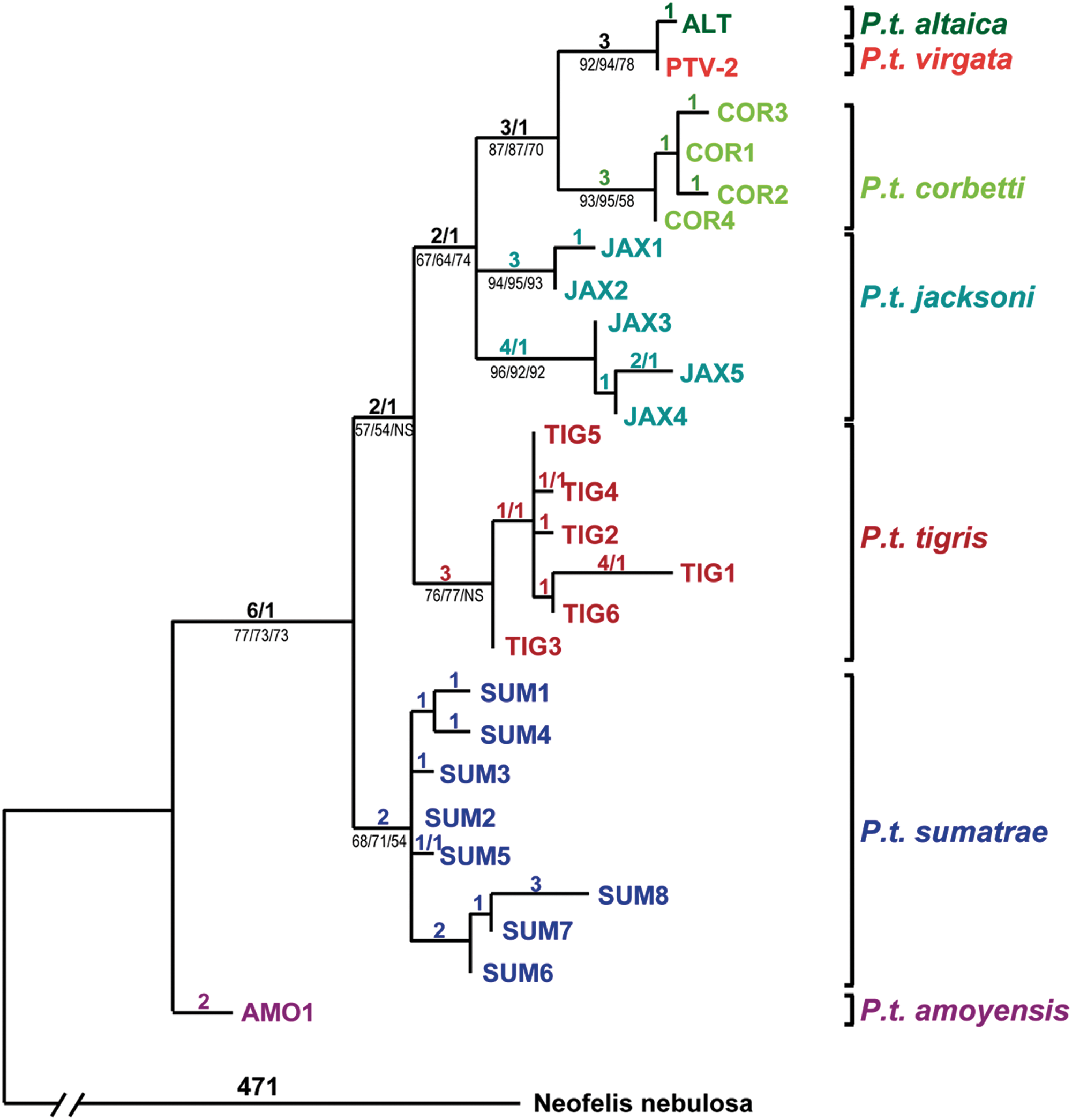 | ২,০০১ × ২,০৯০ (৬৮৪ KB) | smartcommons>Pmaas |
ꯐꯥꯏꯜꯒꯤ ꯁꯤꯖꯤꯟꯅꯐꯝ
ꯃꯁꯤꯒꯤ ꯐꯥꯏꯜ ꯁꯤ ꯁꯤꯖꯤꯟꯅꯕ ꯂꯃꯥꯏꯁꯤꯡ ꯂꯩꯇꯦ ꯫
