ꯐꯥꯏꯜ:AsokaKandahar.jpg

ꯃꯁꯤꯒꯤ ꯄ꯭ꯔꯚꯤꯌꯨ ꯑꯁꯤꯒꯤ ꯁꯥꯏꯓ: ২২০ × ২৩১ ꯄꯤꯛꯆꯦꯜꯁ. ꯑꯇꯩ ꯁꯦꯡꯅ ꯌꯦꯡꯕ ꯌꯥꯕ: ২২৯ × ২৪০ ꯄꯤꯛꯆꯦꯜꯁ | ৬৮৩ × ৭১৭ ꯄꯤꯛꯆꯦꯜꯁ.
ꯐꯥꯏꯜ ꯑꯁꯦꯡꯕ (৬৮৩ × ৭১৭ ꯄꯤꯛꯆꯦꯜꯁ, ꯐꯥꯏꯜ ꯆꯥꯎꯕꯒꯤ ꯆꯥꯡ: ১৮২ KB, MIME ꯃꯈꯜ: image/jpeg)
ꯑꯇꯦꯟꯕꯥ ꯁꯟꯗꯣꯛꯅꯥ ꯇꯥꯛꯄꯥ
{{information
| Author =
| Date = 12:08 P.M., November 27, C.E.2016 (H.E.12,016)
| Description =
- Azərbaycanca: Qəndəharda Aşoka Padşahin iki dildə (Yunan və Arami) yazılmış yazı. 3-cü əsr E.ə. Qabaqcada Kabil Müzeyidə idi, sonra görünməz oldu.
- Ελληνικά: Δίγλωσση επιγραφή (Ελληνικά και αραμαϊκά του βασιλιά Ασόκα, που σήμερα φυλάσσεται στο Μουσείο της Καμπούλ
- English: Bilingual (Greek & Aramaic) inscriptions by king Ashoka at Kandahar (Shar-i-kuna). (3rd century B.C.E.). Preserved at Kabul Museum. Today disappeared. Two-dimensional inscription.
- Esperanto: Dulingva (greka kaj aramea) surskriboj de Reĝo Aŝoka ĉe Kandahar (ŝar-i-kuna). 3a jarcento antaŭ la nuna erao. Antaŭe de la Muzeo de Kabul, poste malaperis. Du-dimensia surskribo.
- Español: Inscripción en dos idiomas (griego y arameo) por el rey Ashoka en Kandahar (Shar-i-kuna). Siglo III AEC. Antes en el Museo de Kabul, hoy desaparecida. Inscripción de dos dimensiones.
- Français : Inscription bilingue (en grec et araméen) par le roi Ashoka à Kandahar (Shar-i-kuna). (3e siècle avant J.-C.). Objet disparu, précédemment conservé au musée de Kaboul. Inscription en deux dimensions.
- Italiano: Iscrizione bilingue (greco e aramaico) di Aśoka a Kandahar (Shar-i-kuna) (III secolo a.C.). Conservata al Museo di Kabul. Oggi scomparsa.
Transcription
Greek (transliteration)
- δέκα ἐτῶν πληρη[....]ων βασι[λ]εὺς
- Πιοδάσσης εὐσέβεια[ν ἔδ]ε[ι]ξεν τοῖς ἀν-
- θρώποις, καὶ ἀπὸ τούτου εὐσεβεστέρους
- τοὺς ἀνθρώπους ἐποίησεν καὶ πάντα
- εὐθηνεῖ κατὰ πᾶσαν γῆν• καὶ ἀπέχεται
- βασιλεὺς τῶν ἐμψύχων καὶ οἱ λοιποὶ δὲ
- ἄνθρωποι καὶ ὅσοι θηρευταὶ ἤ αλιείς
- βασιλέως πέπαυνται θηρεύοντες καὶ
- εἲ τινές ἀκρατεῖς πέπαυνται τῆς ἀκρα-
- σίας κατὰ δύναμιν, καὶ ἐνήκοοι πατρὶ
- καὶ μητρὶ καὶ τῶν πρεσβυτέρων παρὰ
- τὰ πρότερον καὶ τοῦ λοιποῦ λῶιον
- καὶ ἄμεινον κατὰ πάντα ταῦτα
- ποιοῦντες διάξουσιν.
English (translation)
- Ten years (of reign) having been completed, King
- Piodasses (Ashoka) made known (the doctrine of)
- Piety (εὐσέβεια, Eusebeia) to men; and from this moment he has made
- men more pious, and everything thrives throughout
- the whole world. And the king abstains from (killing)
- living beings, and other men and those who (are)
- huntsmen and fishermen of the king have desisted
- from hunting. And if some (were) intemperate, they
- have ceased from their intemperance as was in their
- power; and obedient to their father and mother and to
- the elders, in opposition to the past also in the future,
- by so acting on every occasion, they will live better
- and more happily." (Trans. by G.P. Carratelli [1], see also here)
Imperial Aramaic (Aramaic or Old Bactrian)
- שנן 10 פתיתו עביד זי מראן פרידארש מלכא קשיטא מהקשט
- מן אדין זעיר מרעא לכלהם אנשן וכלהם אדושיא הובד
- ובכל ארקא ראם שתי ואף זי זנה כמאכלא למראן מלכא זעיר
- קטלן זנה למחזה כלהם אנשן אתהחסינן אזי נוניא אחדן
- אלך אנשן פתיזבת כנם זי פרבסת הוין אלך אתהחסינן מן
- פרבסתי והופתיסתי לאמוהי ולאבוהי ולמזישתיא אנסן
- איך אסרהי חלקותא ולא איתי דינא לכלהם אנשיא חסין
- זנה הותיר לכלהם אנשן ואוסף יהותר.
ꯑꯌꯥꯕꯥ
|
This is a faithful photographic reproduction of a two-dimensional, public domain work of art. The work of art itself is in the public domain for the following reason:
The official position taken by the Wikimedia Foundation is that "faithful reproductions of two-dimensional public domain works of art are public domain".
This photographic reproduction is therefore also considered to be in the public domain in the United States. In other jurisdictions, re-use of this content may be restricted; see Reuse of PD-Art photographs for details. |


Captions
Add a one-line explanation of what this file represents
Greek and Aramaic inscription Kandahar, Afghanistan
Inscripción bilingüe greco-aramea de Kandahar, Afganistán
Bilingual edict (Greek and Aramaic) 3rd century BC by Indian King Ashoka, see Edicts of Ashoka, from Kandahar. Kabul Museum.
ꯐꯥꯏꯜꯒꯤ ꯄꯨꯋꯥꯔꯤ
ꯆꯩꯆꯠ/ꯃꯇꯝꯗ ꯅꯝꯃꯨ ꯃꯇꯝ ꯑꯗꯨꯗ ꯐꯥꯏꯜ ꯑꯗꯨ ꯎꯅꯕ
| ꯆꯩꯆꯠ/ꯃꯇꯝ | ꯈꯨꯠꯄꯤꯈꯨꯖꯤꯟ | ꯄꯥꯛ ꯆꯥꯎꯕꯥ | ꯁꯤꯖꯤꯟꯅꯔꯤꯕ | ꯑꯄꯥꯝꯕ ꯐꯣꯡꯗꯣꯛ ꯎ | |
|---|---|---|---|---|---|
| ꯍꯧꯖꯤꯛꯀꯤ | ꯱꯷:꯳꯸, ꯲꯷ ꯅꯣꯚꯦꯝꯕꯔ ꯲꯰꯱꯶ | 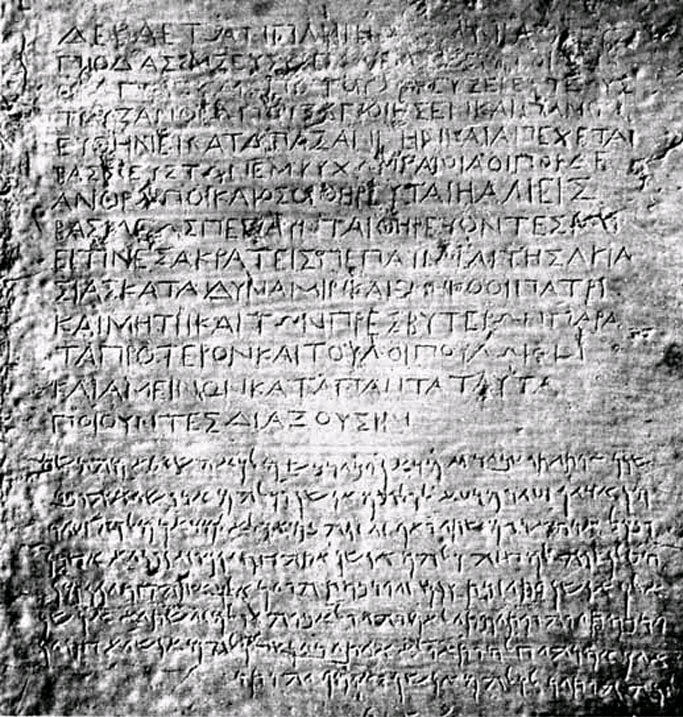 | ৬৮৩ × ৭১৭ (১৮২ KB) | smartcommons>Pataliputra! | Better quality |
ꯐꯥꯏꯜꯒꯤ ꯁꯤꯖꯤꯟꯅꯐꯝ
ꯃꯁꯤꯒꯤ ꯐꯥꯏꯜ ꯁꯤ ꯁꯤꯖꯤꯟꯅꯕ ꯂꯃꯥꯏꯁꯤꯡ ꯂꯩꯇꯦ ꯫
